
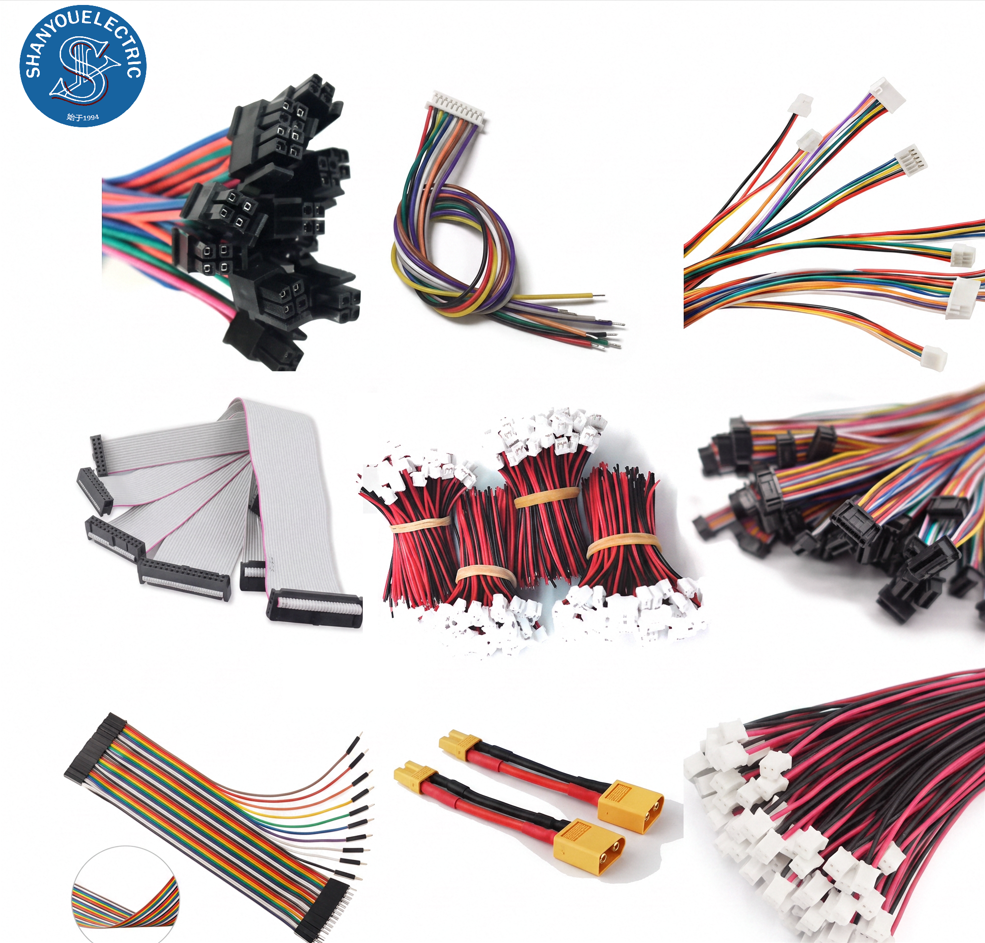
Do you know about the IPC standards for wire harness welding processes? In the wire harness industry, to ensure consistency and high reliability of solder joints, the IPC standards establish strict regulations on welding materials, bonding conditions, and process details. All high-end wire harness welding operations must strictly follow these standards to guarantee product quality. Let’s take a look at the core requirements.
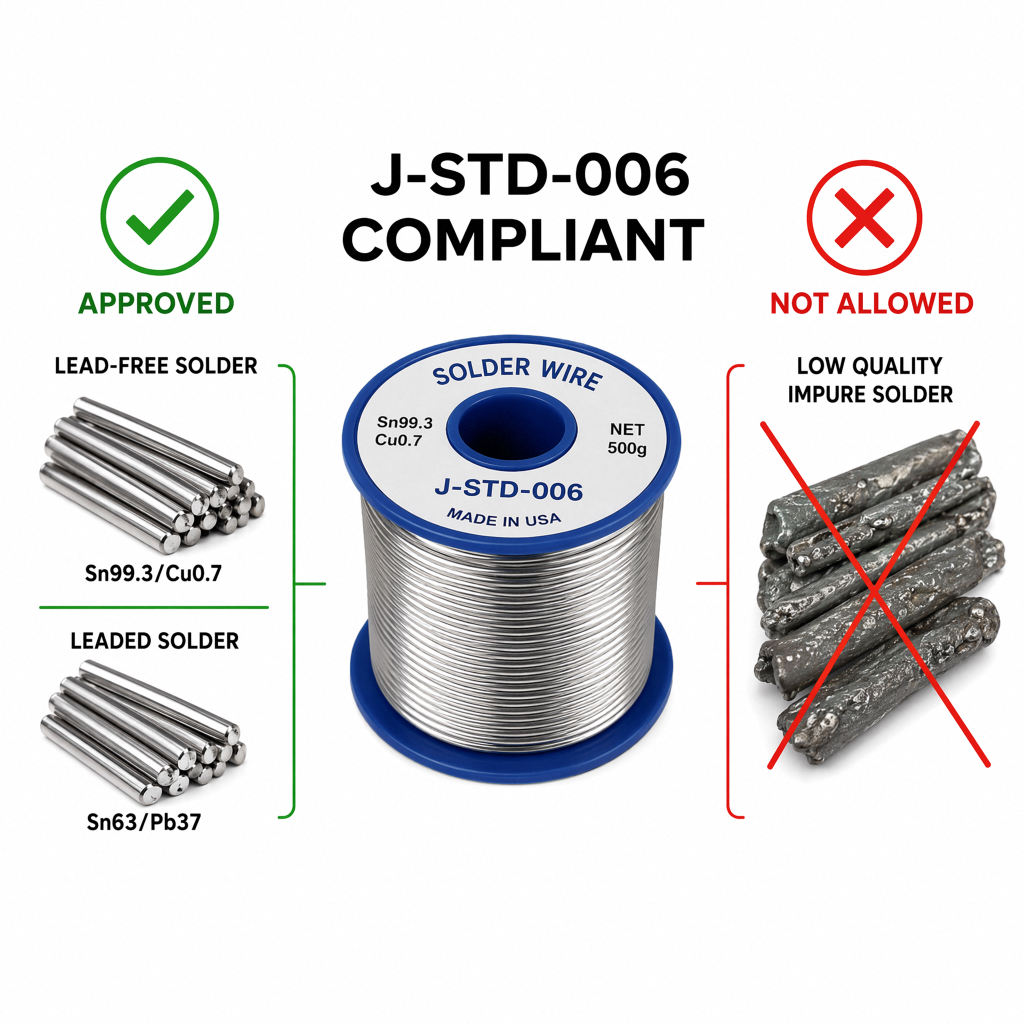
- Solder Material Specifications: The solder used must fully comply with the J-STD-006 industry standard. Depending on product requirements, leaded or lead-free solder can be selected. The use of inferior solder or solder with excessive impurities is strictly prohibited to prevent issues such as solder joint oxidation, poor connections, or brittleness from the source.
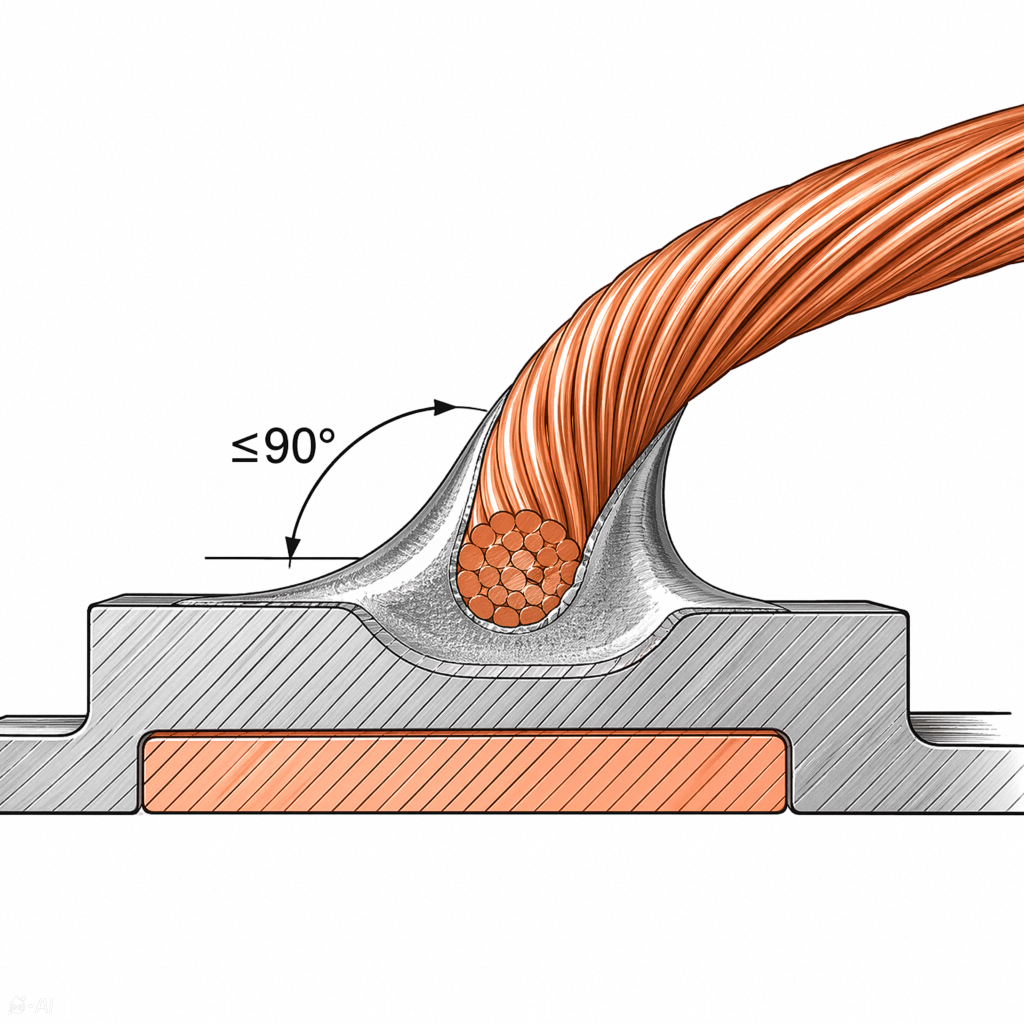
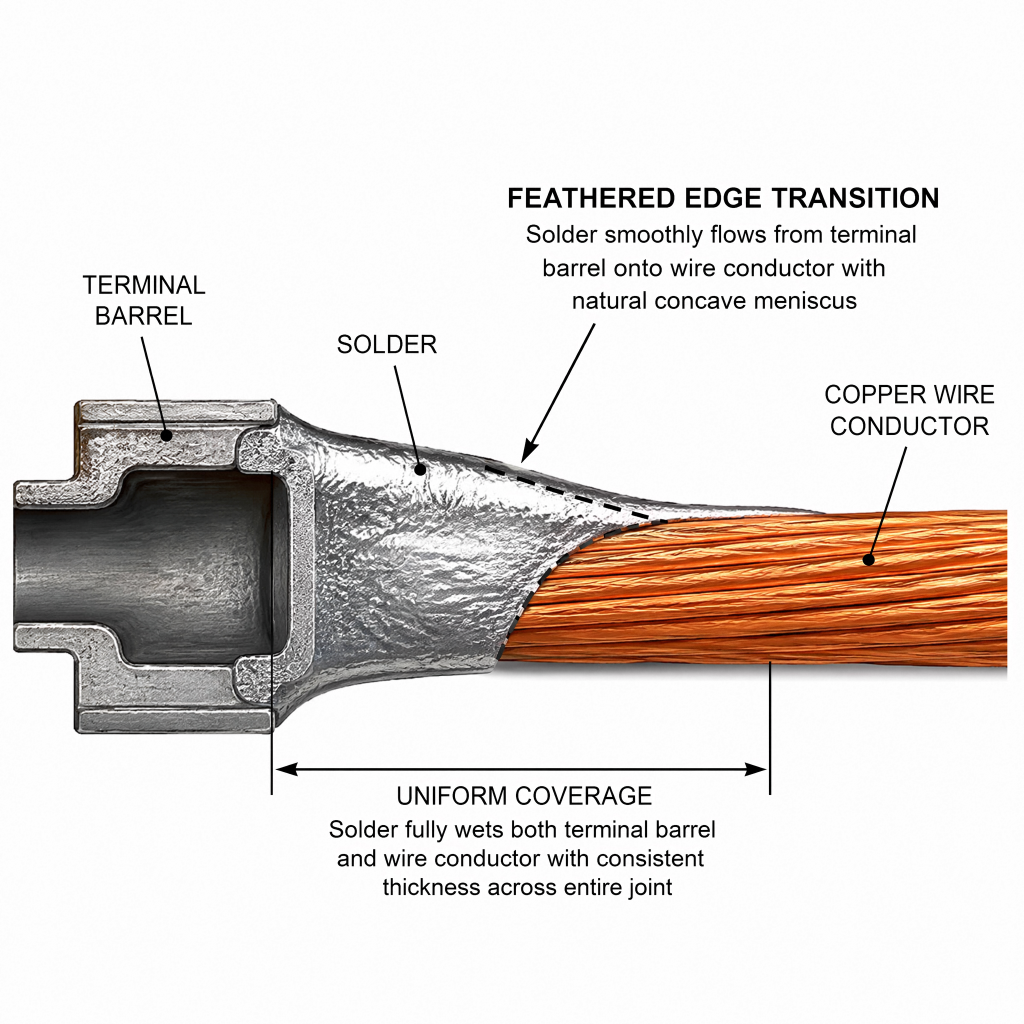
- Wetting and Fusion Standards: The solder must fully metallurgically bond with the copper conductor and the terminal contact surface. The wetting angle should be strictly controlled at ≤90°, eliminating poor wetting or local detachment, ensuring unobstructed electrical transmission and firm mechanical connection.
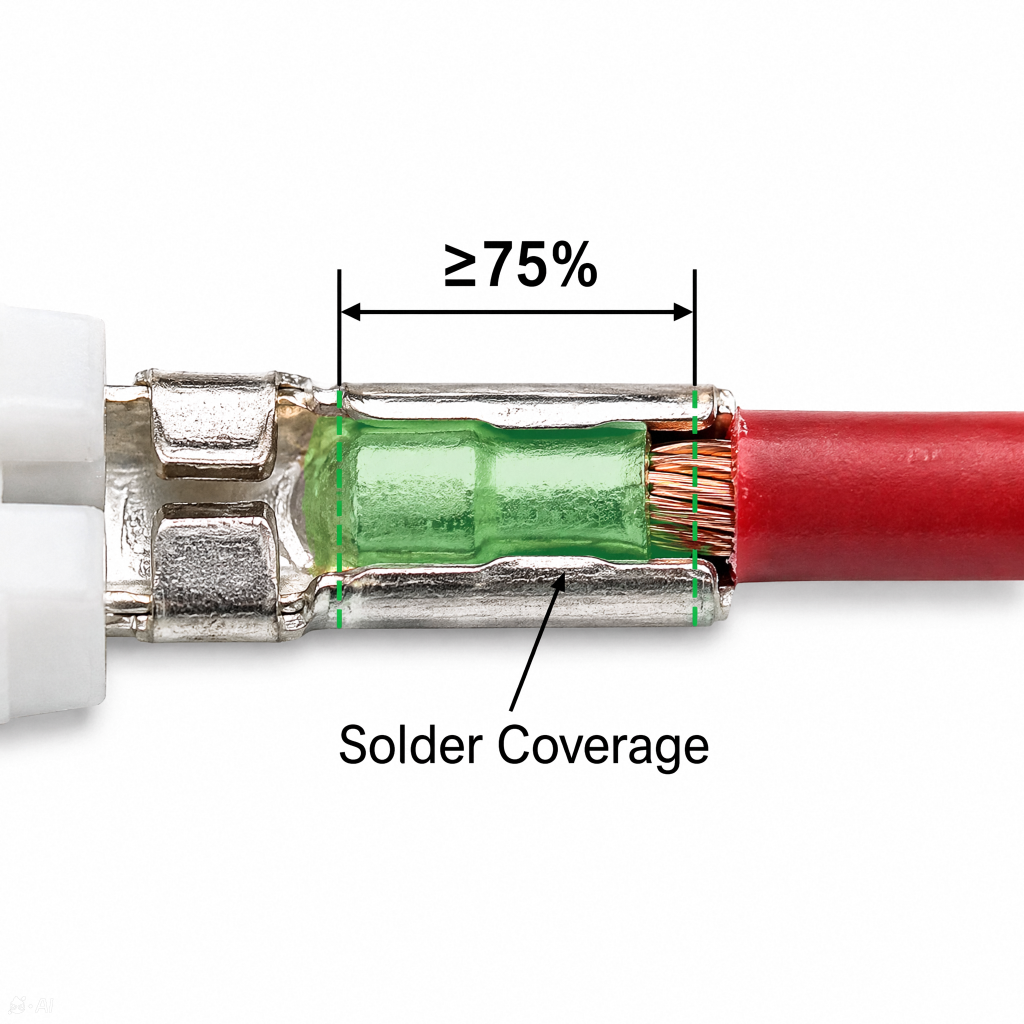
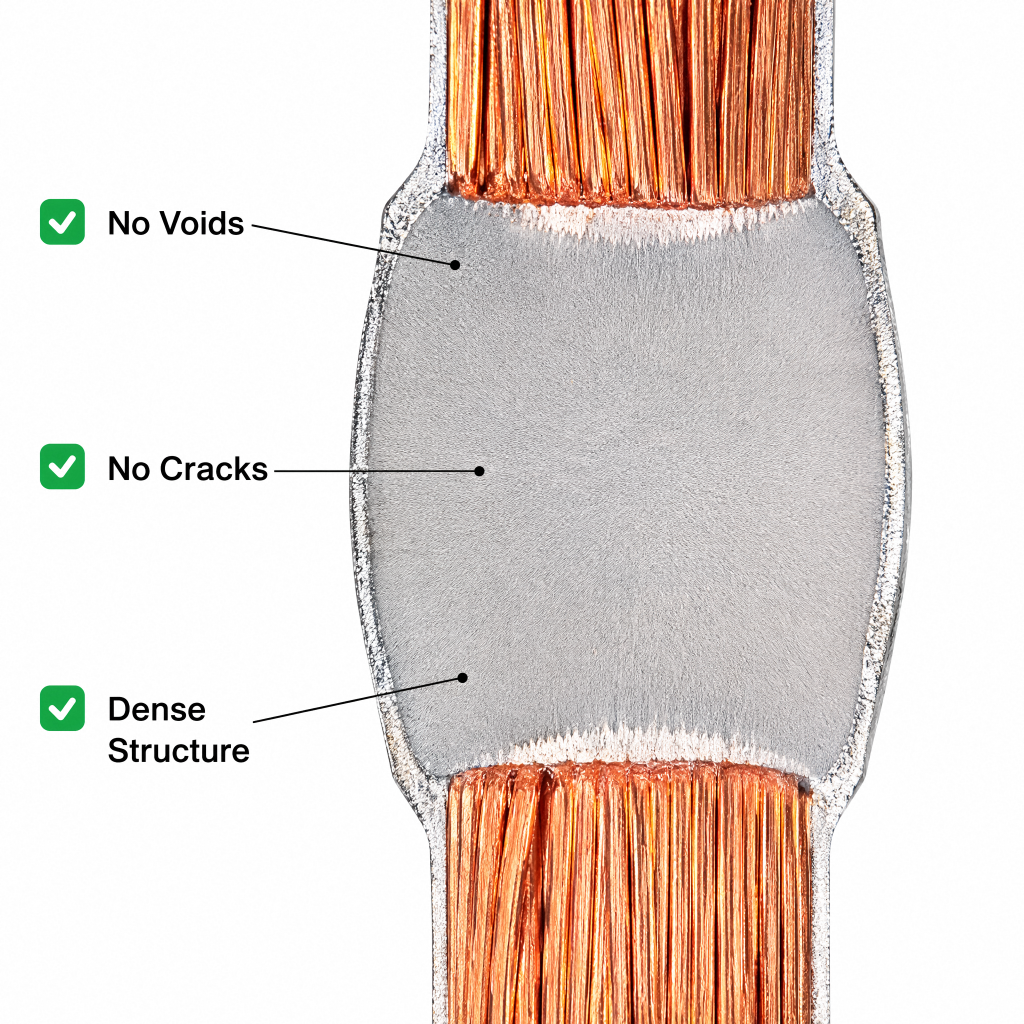
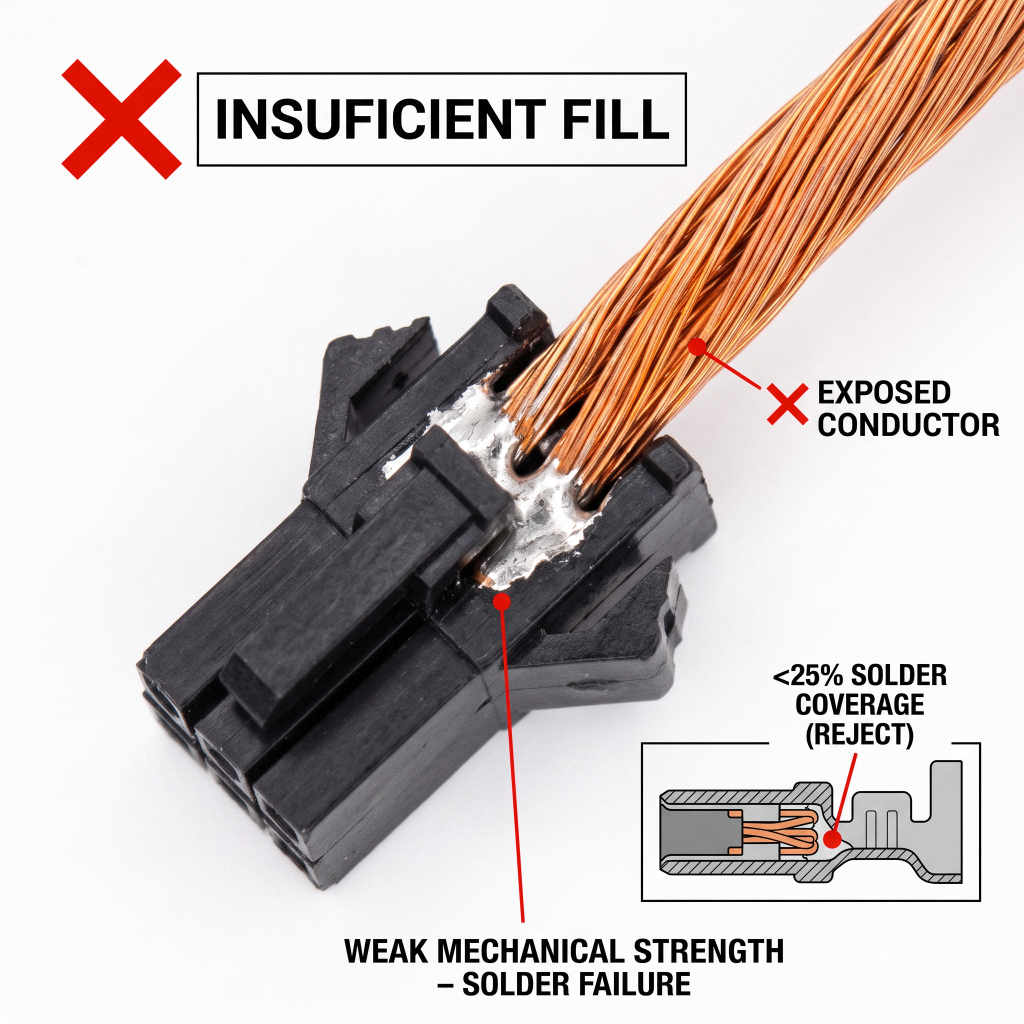
- Solder Fill Requirements: The contact coverage of solder on the wire and terminal must not be less than 75%. There should be no dense pores, through voids, or slag inclusions in the soldered area, ensuring that the solder joint meets the required conductive area and structural strength.
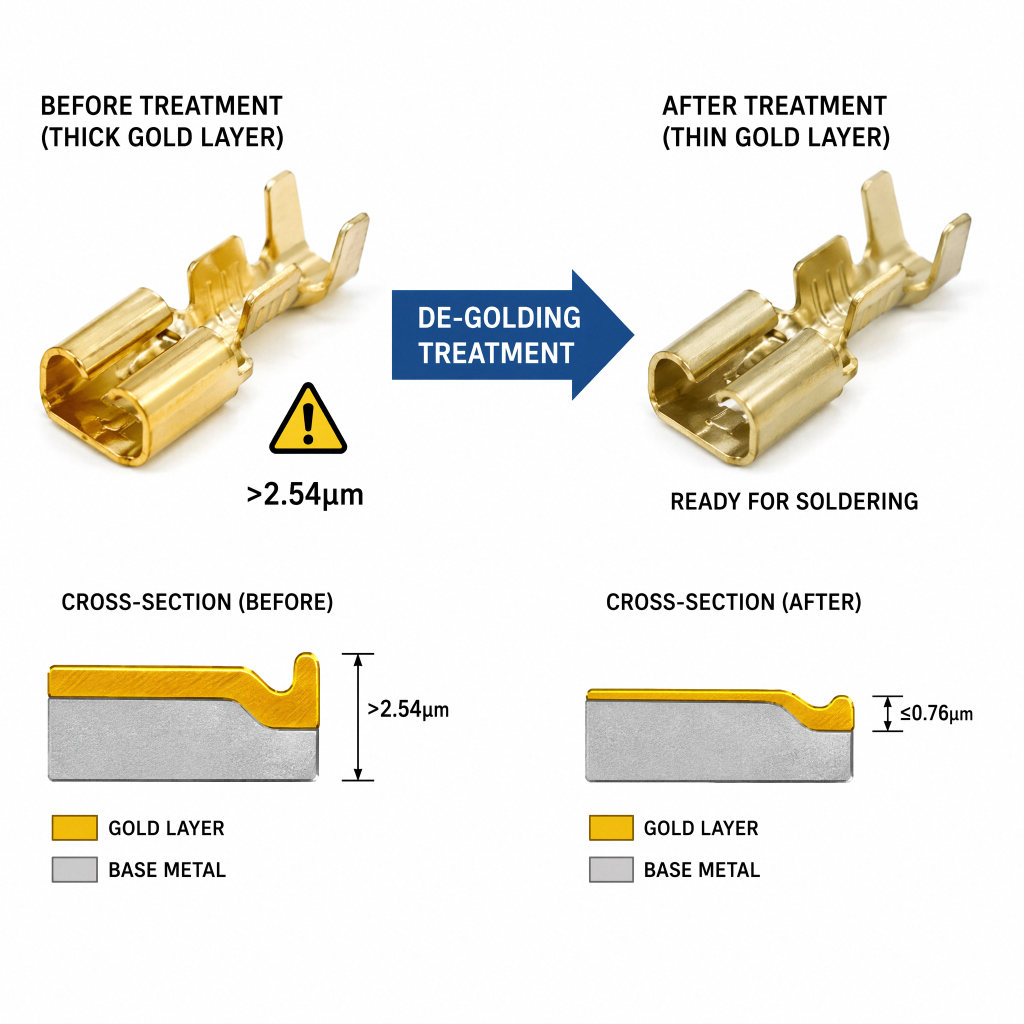
4. Special Treatment for Gold-Plated Layers: For soldering gold-plated terminals, if the base metal gold layer thickness exceeds 2.54 μm, it must be pre-treated to remove gold. Excessively thick gold layers can embrittle the solder alloy layer, significantly reducing vibration resistance and potentially leading to solder joint cracking or detachment during long-term use.
Having understood the IPC requirements, what are the core characteristics of IPC-compliant solder joints? Qualified wire harness solder joints balance aesthetic uniformity, electrical stability, and mechanical robustness. Solder joints that meet IPC acceptance standards share uniform features, allowing quick visual assessment and supporting routine production line inspection:
Firstly, the solder joint appearance is smooth and flat, with a uniform metallic luster. Lead-free solder joints may appear slightly matte due to material properties, but the overall texture is delicate without coarse particles or black oxidation.
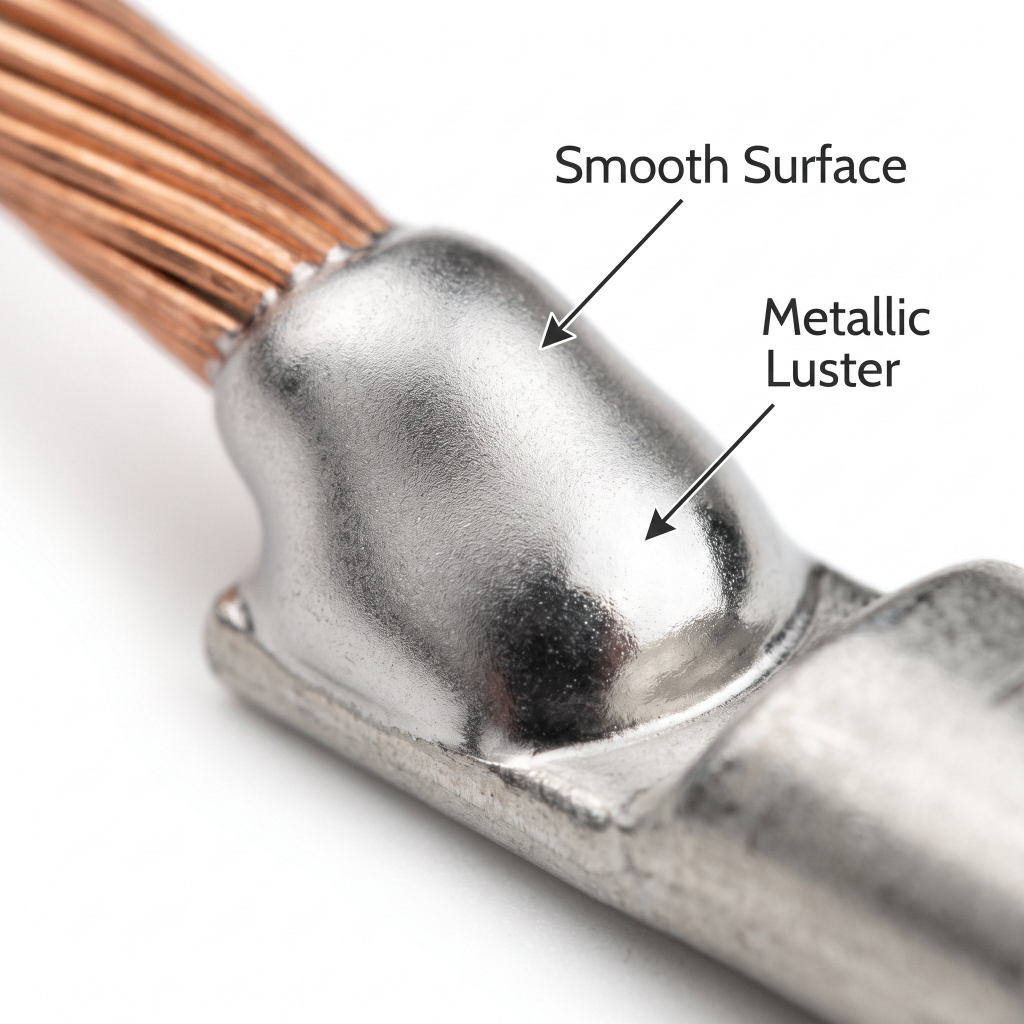
Secondly, solder is evenly spread, with natural feathered edges, perfectly fitting the copper wire and terminal bonding areas, without local buildup or solder gaps.
Thirdly, the solder joint structure is dense, without visible pores, cracks, or depressions, and no internal voids exist, ensuring structural stability.
Fourthly, the multiple strands of the copper wire are clearly distinguishable, and the conductor is completely encapsulated by solder, with no exposed, frayed, or broken wires, ensuring both electrical conductivity and prevention of oxidation or short circuits
.
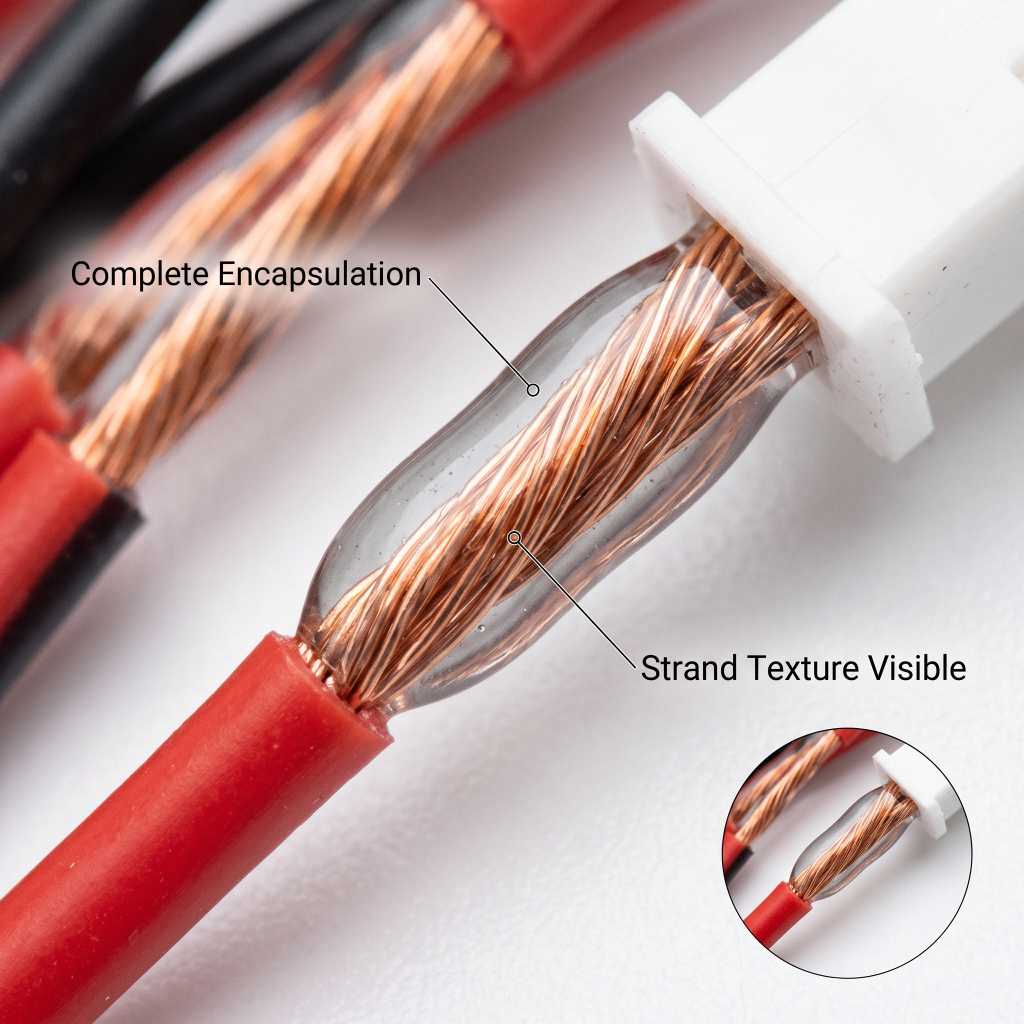
According to the IPC defective product evaluation standards, high-frequency defects in harness welding production are mainly divided into four categories. All belong to defect types that require strict process control and full rejection. The specific issues and hazards are as follows:
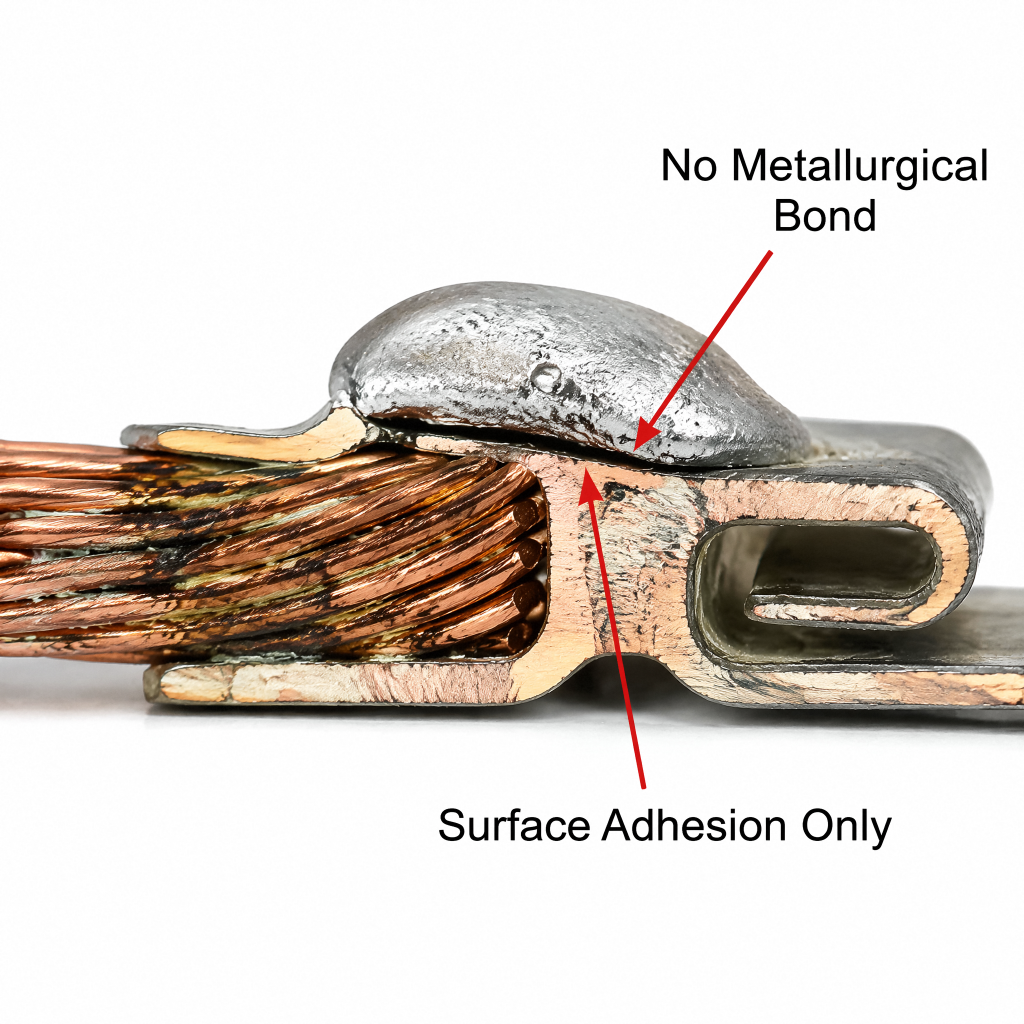
1. Cold solder joint: The core causes are poor solder wetting and insufficient pre-treatment of the conductor (oil contamination or oxidation not cleaned). It manifests as solder only adhering to the surface of the workpiece, without forming a metallurgical bond with the copper wire or terminal. The hazards are significant, as it can lead to unstable contact resistance in the harness, and intermittent open circuits or signal transmission anomalies are likely during device operation or vibration. This is a key defect to control in high-end harnesses.
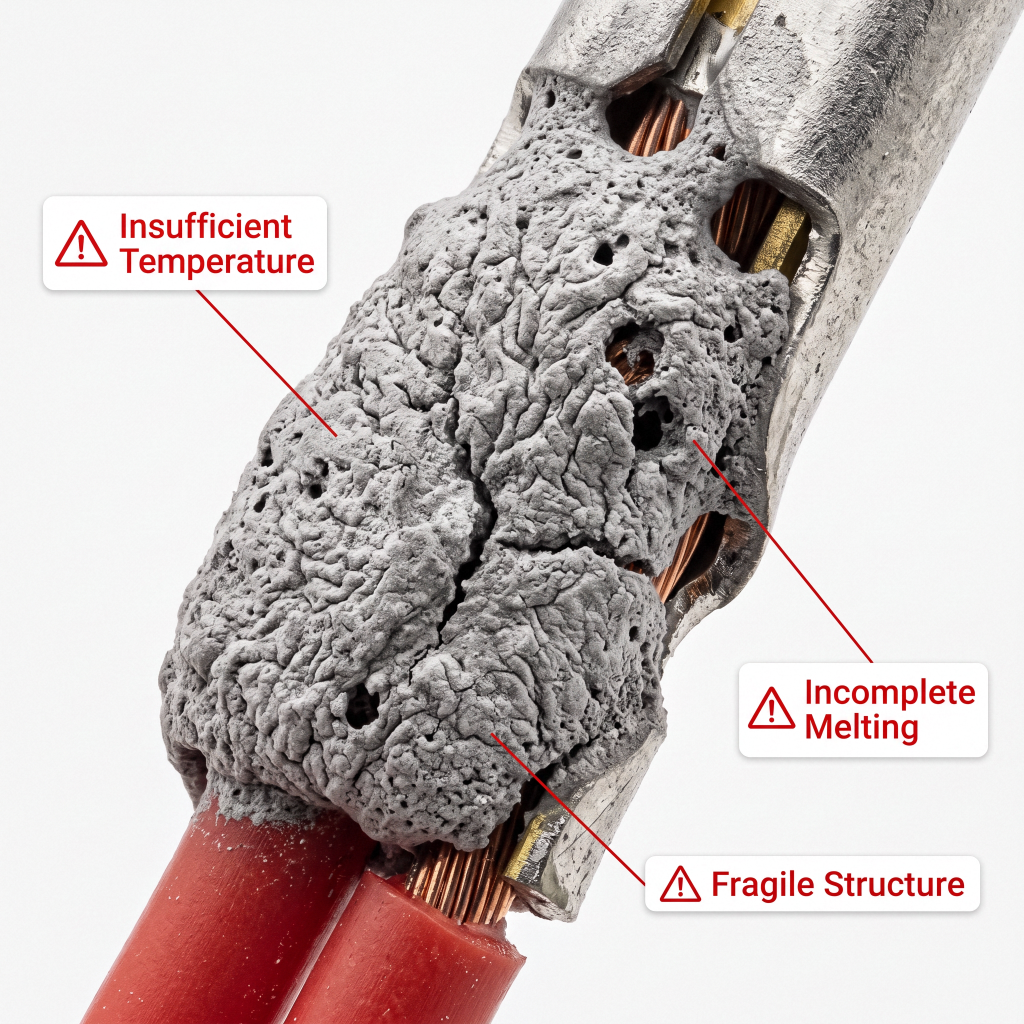
2. Cold weld: Mostly caused by insufficient welding temperature or too short heating time, resulting in the solder solidifying before fully melting. The solder joint appears overall gray, porous in texture, and structurally fragile, making it prone to fall off under stress, completely failing to meet electrical and mechanical requirements.
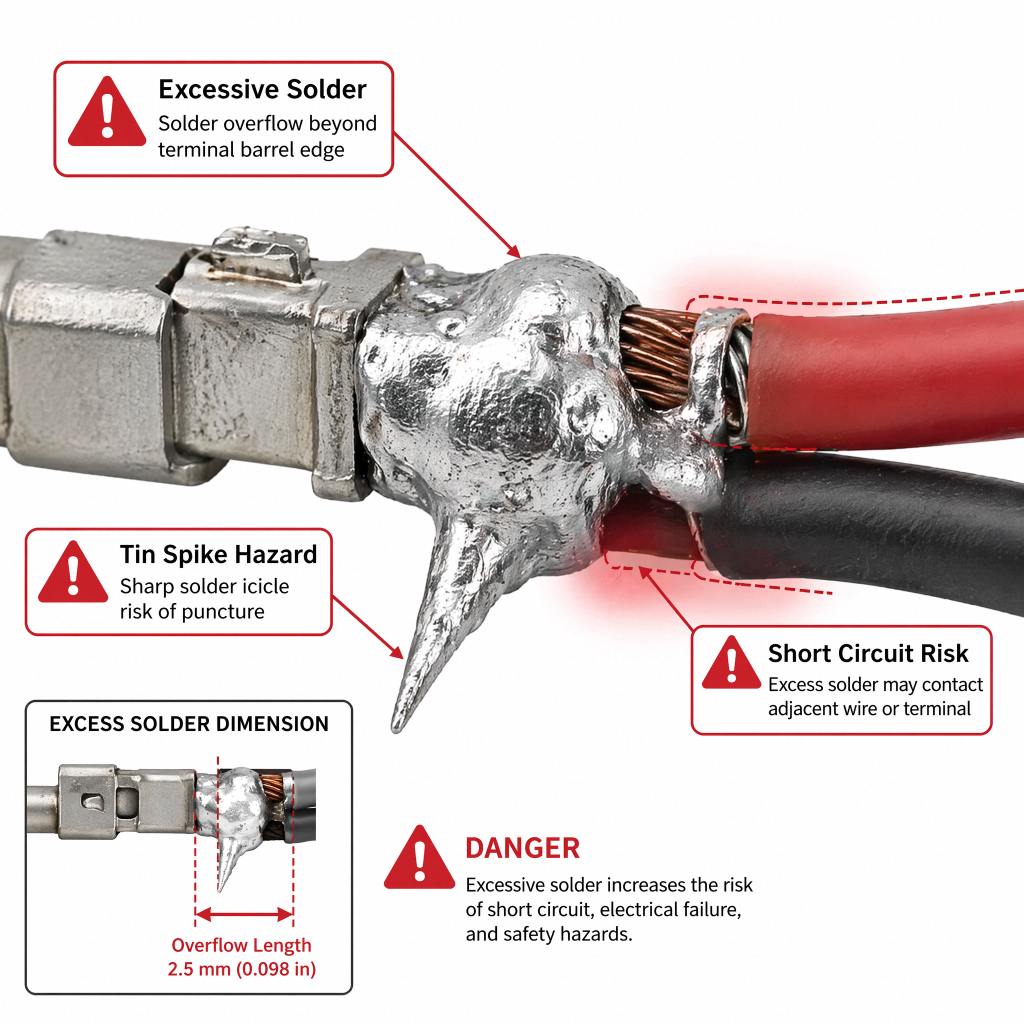
3. Excess solder: Caused by excessive solder feeding or improper handling during operation. Excess solder may form solder spikes or solder piles, not only affecting the harness assembly space but also significantly increasing the safety risks of short circuits or leakage in adjacent circuits, which is particularly dangerous in high-voltage harnesses.
4. Insufficient solder: The solder filling amount does not meet the standard, leading to inadequate coverage. This results in insufficient effective conductive cross-section and weak mechanical strength of the solder joint. Long-term current flow can cause overheating and erosion, and under pulling or vibration conditions, solder joints are prone to fracture, leading to circuit failure.
The core quality control logic of harness welding is to strictly implement the three fundamental principles of IPC standards: sufficient wetting, full filling, and defect-free density. Compared with ordinary crimping processes, welded connections offer higher precision and stability, but their quality heavily depends on process operations, parameter control, and prior pre-treatment. Strict adherence to IPC standards throughout material handling, forming, and defect evaluation not only helps prevent various welding defects but also maximizes the long-term stable operation of high-end harnesses under complex conditions.
Pingback: x - Custom wire harness manufacturer