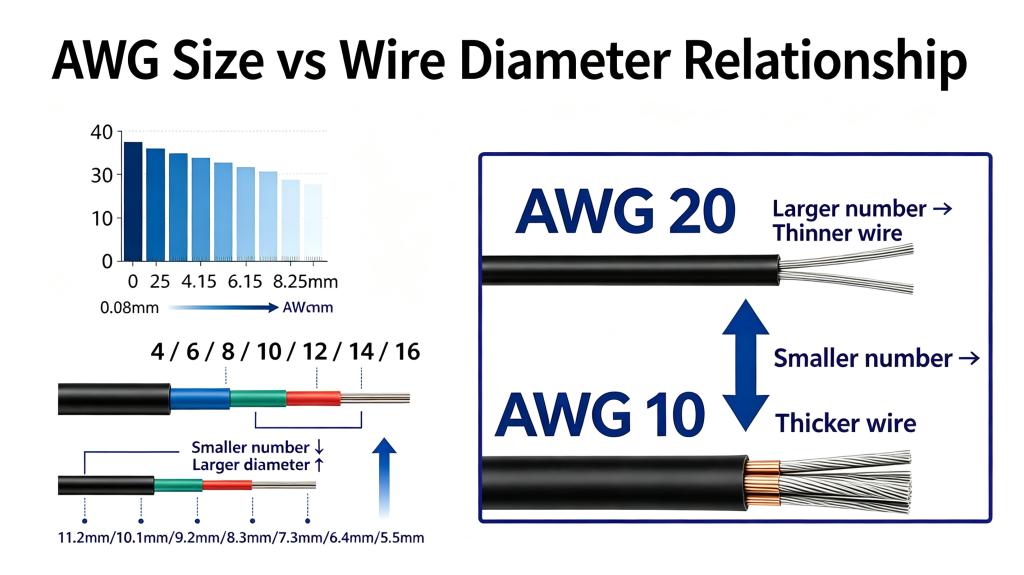
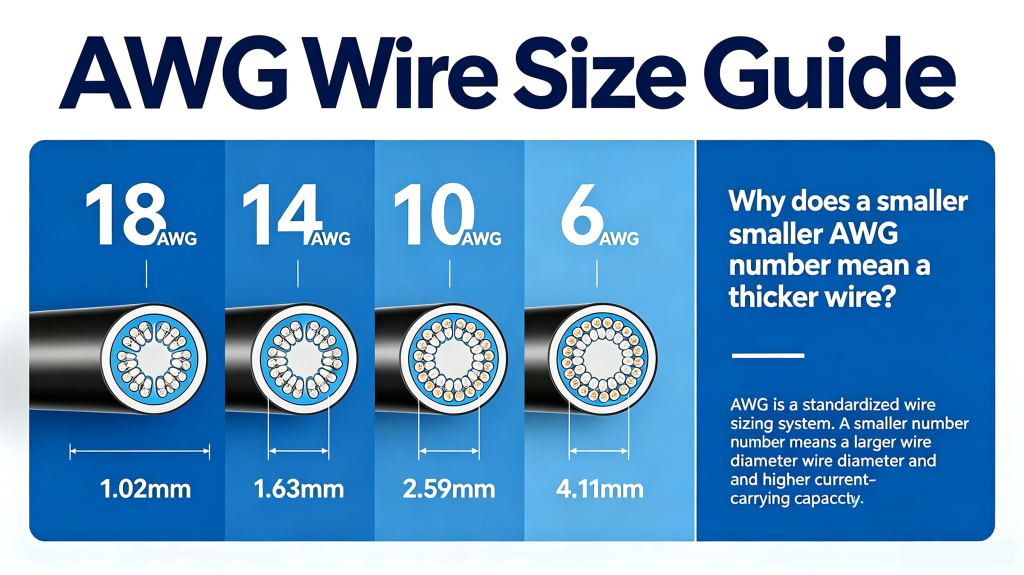
Many people get confused when looking at wire specifications in terms of AWG. Intuitively, they expect that a smaller number would indicate a thinner wire, but actually, the opposite is true.
The lower the AWG number, the thicker the wire, which seems counterintuitive and confusing at first. In fact, AWG is the American Wire Gauge standard, and its numbering logic is reversed—it does not follow the conventional logic of larger numbers representing larger sizes. To understand it, one just needs to grasp the principle behind its creation.
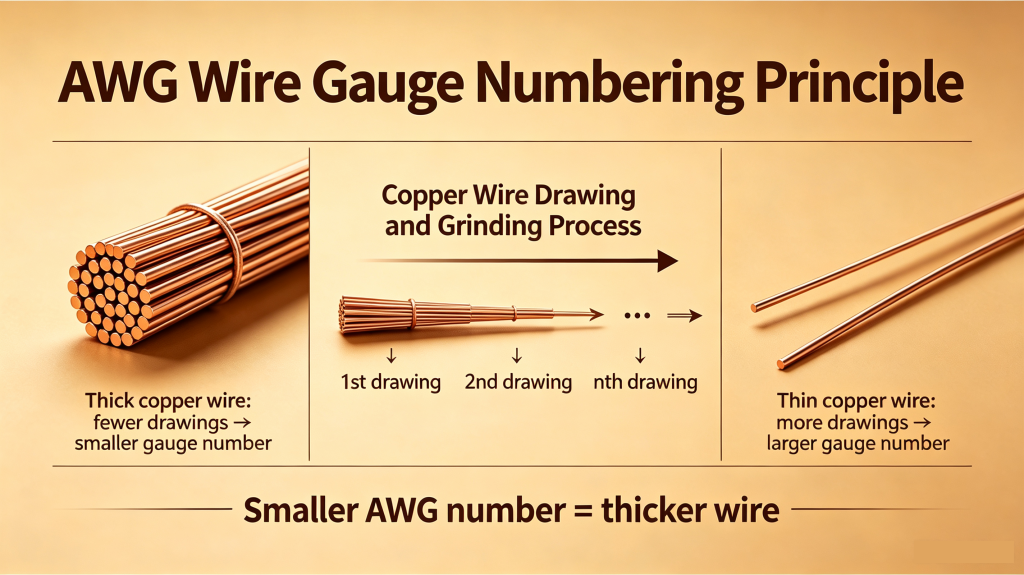
In the past, when making wires, copper strands were continuously drawn and polished. Every time a wire was drawn, it became slightly thinner. Before complex measuring tools existed, workers used the number of drawing operations to label the wires. Thick copper wires required fewer drawing operations, so the number assigned was small; thin copper wires required many repeated drawings, so the number assigned was large. This is the core reason why a smaller AWG number corresponds to a thicker wire.
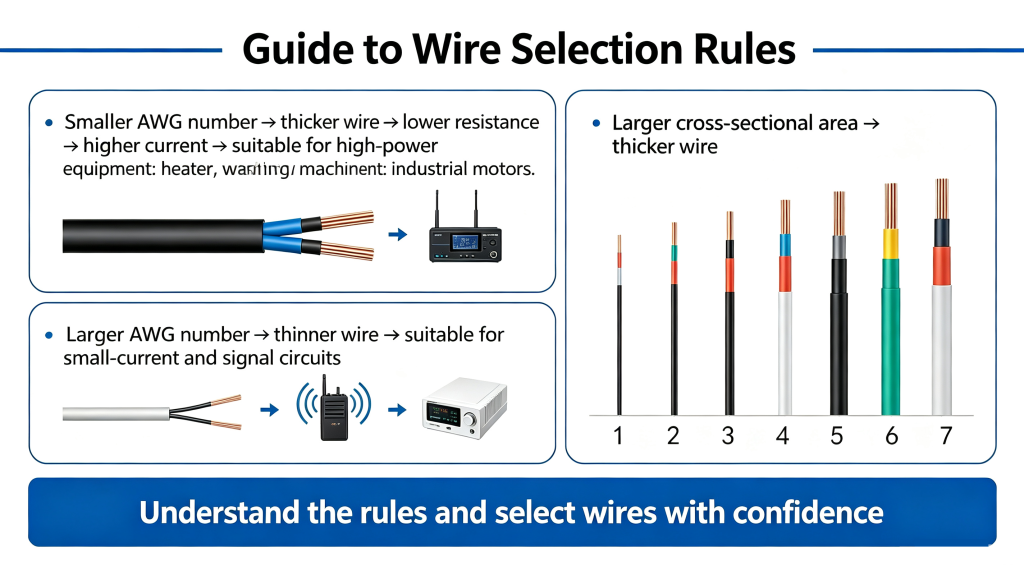
So, just remember this simple rule: the smaller the AWG number, the thicker the wire, the lower the resistance, and the greater the current it can carry, making it suitable for high-power devices such as hairdryers, washing machines, and industrial motors. Conversely, the larger the AWG number, the thinner the wire, which is only suitable for low-current or signal circuits. According to national standards, the larger the square millimeter rating, the thicker the wire. Understanding this rule ensures that when selecting wires or reviewing wire specifications, mistakes will no longer occur.